From ancient byways to modern highways, glimpses of faith are everywhere...

Saturday, February 9, 2019

ET phone Harvard


Oumuamua's Hyperbolic Trajectory (by Tomruen)
If ET were to phone Harvard, one of its top astronomers might not be the least bit surprised.

Avi Loeb, Harvard’s astronomy department chairperson, has long been a “believer.”  Known for his lectures on “cosmic modesty” (the “idea that it’s arrogant to assume we are alone in the universe”), he backs up his theories with plenty of equations.

Although peers might wish to, it’s hard to dismiss Loeb as “a crank.”  Take the case of Oumuamua, an “interstellar object” that can’t be easily explained.  Whereas many consider it to be some sort of rogue rock, Loeb thinks otherwise.  He suggests that it could be “debris from an advanced technological equipment.”  In other words, debris from an alien spacecraft…     

Resources
https://www.msn.com/en-us/news/us/harvards-top-astronomer-says-an-alien-ship-may-be-among-us-%e2%80%94-and-he-doesnt-care-what-his-colleagues-think/ar-BBTaWxw?li=BBnb7Kz&ocid=BHEA000

Copyright February 9, 2019 by Linda Van Slyke   All Rights Reserved

Friday, February 8, 2019

The cat came back


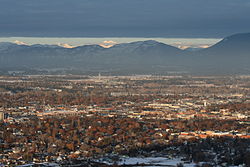
Kalispell, Montana   (Photo by Dan Petesch)
After nearly freezing to death, Fluffy the cat regained her fluff.

Brought to a veterinarian's office with a body temperature that wouldn’t even register, Fluffy was unresponsive and
stiff.  She was gradually thawed, “using towels, cage warmers and intravenous fluids.”

When Fluffy began to growl, Dr. Jevon Clark at the Animal Clinic of Kalispell, Montana knew she would be okay.  His relieved quote: These crabby cats are survivors.

Resources
https://www.foxnews.com/us/fluffy-the-cat-revived-after-found-nearly-frozen-to-death

Copyright February 8, 2019 by Linda Van Slyke   All Rights Reserved
Thursday, February 7, 2019

Bubbling Over


Gas Clouds in the LMC   (ESO photo)
Scientists at the European Southern Observatory (ESO) were no doubt bubbling over with excitement as they noted a “gargantuan” grouping of newly discovered stars.

These bubbles of baby stars are located within the Large Magellanic Cloud (LMC), “a small galaxy that orbits the Milky Way.”  Our cosmic neighbor, this galaxy is only “160,000 light-years from Earth.”

The bubble effect is caused by “ionized hydrogen.”  Clouds of such have been referred to as “stellar nurseries.”

Resources
https://www.msn.com/en-us/news/technology/a-gargantuan-bubble-of-new-stars-in-nearby-galaxy/ar BBTfiXs?OCID=ansmsnnews11

Copyright February 7, 2019 by Linda Van Slyke   All Rights Reserved